The revealing of a new Porsche, and in particular the 911, is usually the chance for a game of spot the difference. There are surely only so many ways a car company can reconfigure basically the same components and styling touches without running out of ideas, eventually stumbling upon the same car they’ve already shown us and hoping we won’t notice. Some might say this is a trick they pull off every time when it comes to a new release. For a company so highly regarded in design terms when it comes to kitchen utensils, bikes, phones, pens, trainers and so much else, you would have thought they’d want to show off their flair and creativity with their cars too. This, of course, would upset the Porsche faithful, a loyal group of die-hard enthusiasts and fastidious collectors. They yearn for the little details and historic touches to such an extent that you’d be forgiven for thinking they’d rather Porsche just left their cars alone and made the same model for the rest of time. And don’t even think of mentioning that the engine is in the wrong place and that’d it’d handle better if they moved it a touch forward.
Yes they’ve released new models in the past but it’s clear to see the lineage throughout every model, in a bid to keep their faithful fans happy. Ask someone who doesn’t know about car design which model each Porsche is from the front and they’d struggle, even some Porsche fans may struggle. Basically, we all know the Boxster looks like a small 911, the Cayman is just a Boxster with a roof, the Cayenne is a 911 that’s on stilts and the Macan is just a small Cayenne, the Panamera looks like a fat 911 from the front and from every other angle not sure what is going on, it must be something glandular. Then of course there’s the 911, which comes in so many variants of Carerra 2 and 4, Targa, Carrera S, Carrera 4S, GT3, GT3 RS, GT2, Turbo, Turbo S, the list goes on and on. You’d struggle to actually visit a showroom and know which one you’d want, and of course the current one looks pretty much the same as the one before, and the one before that, in fact put the very first one and the latest one side by side and it’s a wonder it took them so long to get from the first to last one. I bet there aren’t many models that look so similar over five decades of evolution. Of course there’s the 918, but even that parked next to a Carerra GT looks very similar too.
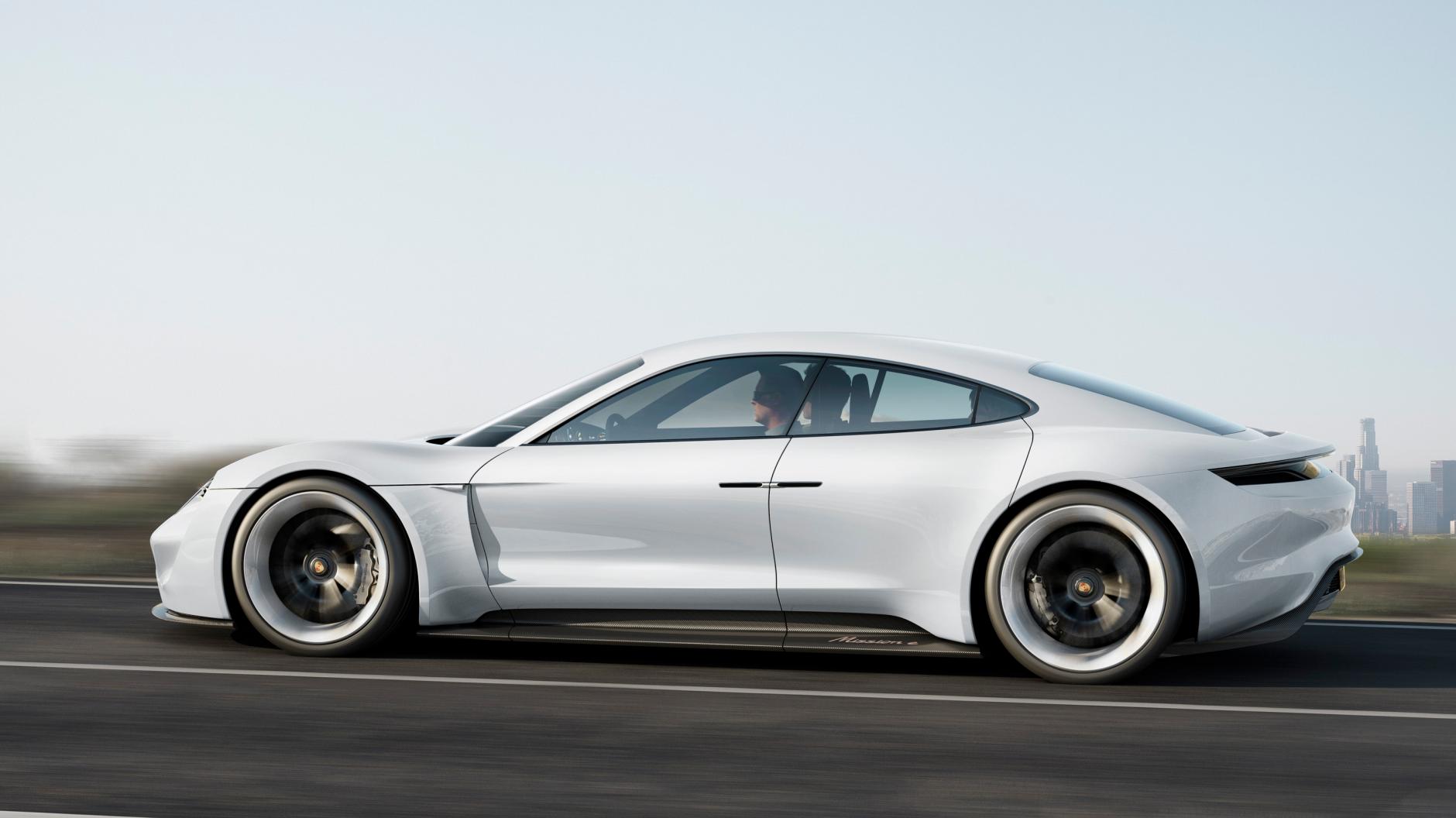
Thankfully Porsche themselves have decided that they want people to see just what they can do when it comes to designing a fresh, brand new model, full of forward thinking and not a hint of current models in sight. This week in Frankfurt we got a glimpse of their all new electric concept for the future, the Mission E. – A four seat 600 horsepower fully electric sports car with a 500km driving range and a 0-60 time of 3.5 seconds. Their intentions with this car was to gauge a reaction and amaze punters with a new model and design direction, the way they did with the 911 fifty years ago, they’ve even given themselves a timescale of 3 and a half years before they’d be looking to put the car into production. How stereotypically precise of them. Early indications suggest that it is more than a concept and that Porsche is merely awaiting technology to catch up with their ambitious targets. The power output, speed and weight targets are all fairly believable, yet the charge time of 15 minutes is where they get a little ambitious. We’d all consider an electric car if that was a possibility.
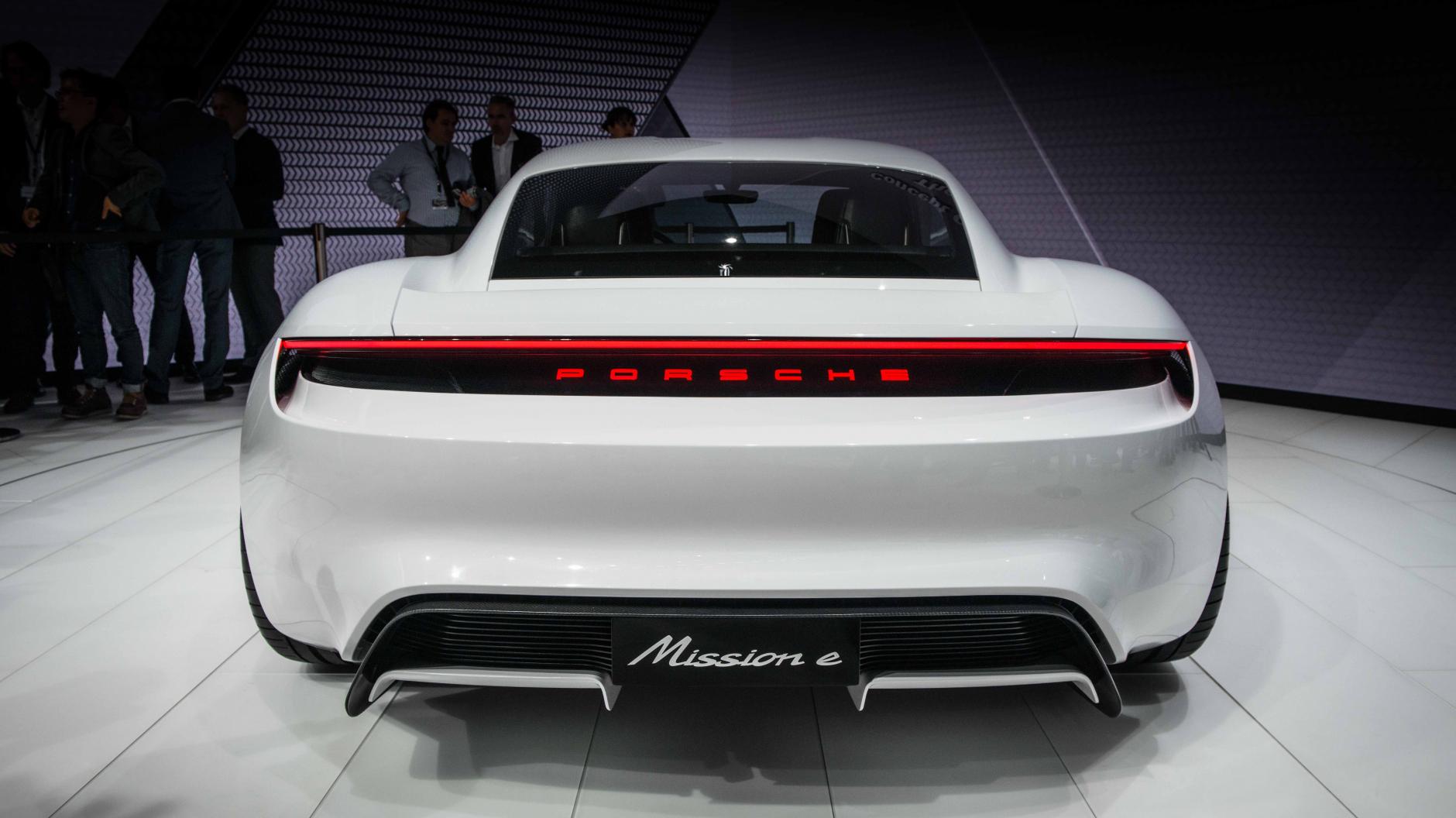
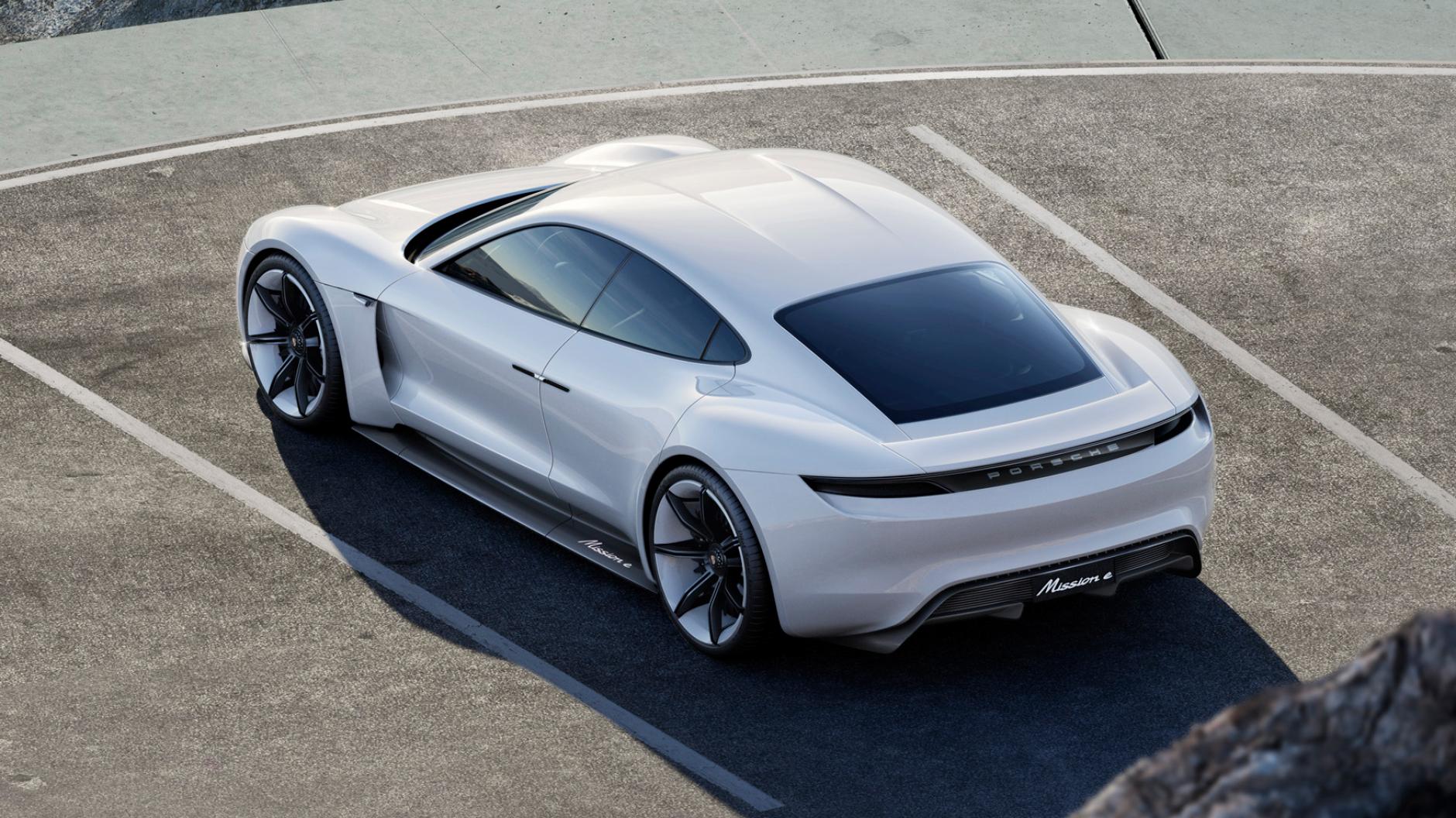
Still, forget about the impossible claims for now and just focus on how this thing looks. Yes there are familiar styling cues and nods to previous eras of their long lineage of history and tradition, but they couldn’t very well go in a completely different design direction could they. The front end looks like a futuristic 911, with the now Porsche trademark of four spot LED daytime running lights per headlight, but enough of a departure to make it look different to the rest of the Porsche family. There are hints of the 911 in the side window profile also, but again, it isn’t something that alters the appearance of an all-new model. Everything that offers a hint to a traditional Porsche trait is exaggerated and oversized, from the bulging wheel arches with inset door line, 959-eske, to the overhanging boot lid come spoiler reminiscent of the latest design variation of the familiar 911 style. Yet the four door layout with rear suicide doors leaving clean lines with no B-pillar is fresh from the Porsche design studio, no throwback or tradition here. The simplistic linear brake light configuration could be said to hark back to their back catalogue, yet is distinctive and different to be fresh and a new direction. As you’d expect, as with the interior of all futuristic cars, the Mission E.’s insides are awash with curved touch screens, minimal dial arrangement and neon mood lighting, none of which seem to make it to production cars. There never seem to be any air vents either, not sure how people of the future are expected to keep cool in their hi-tech cars, surely air-con hasn’t become a thing of the past by then.
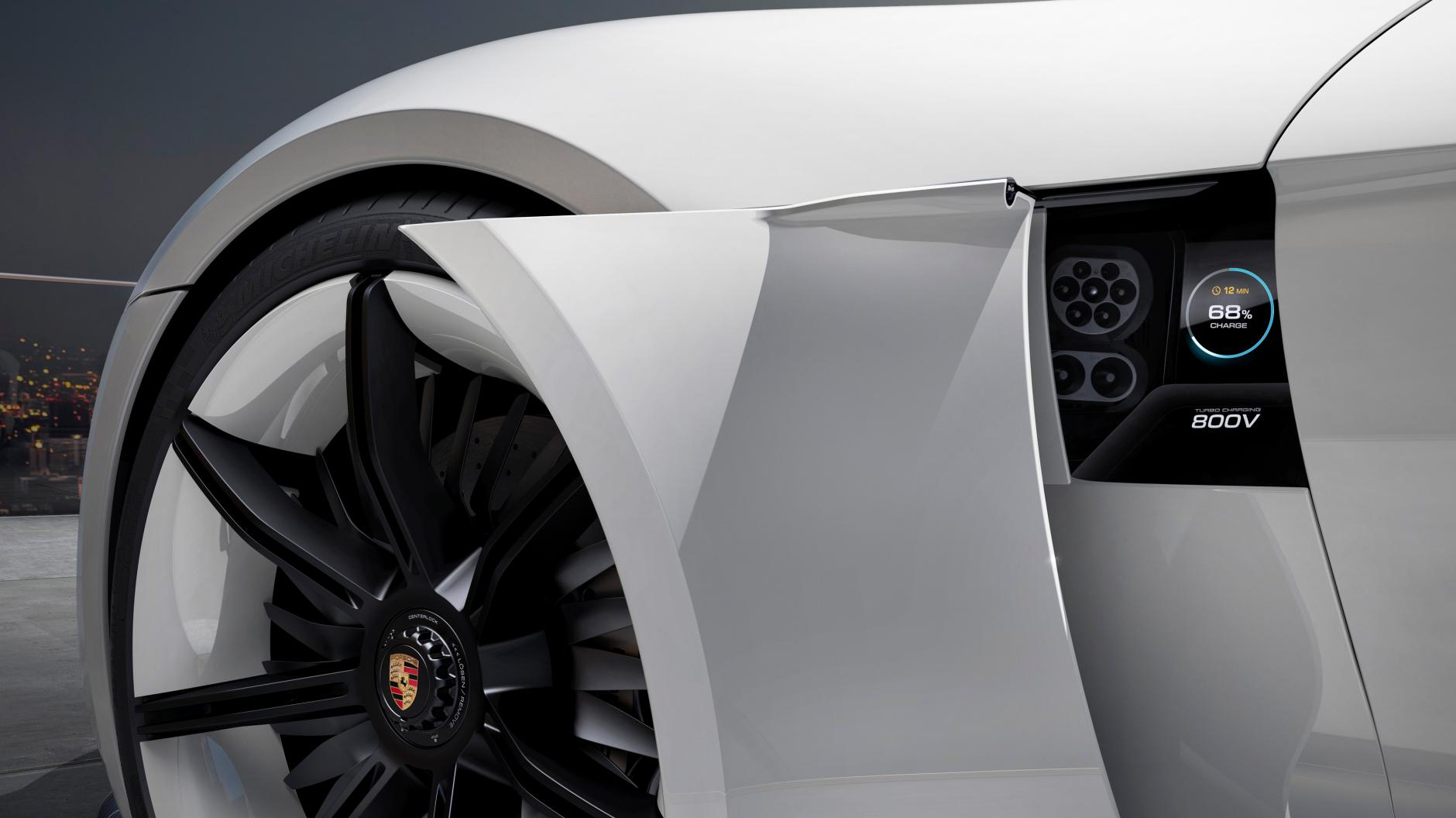
Aside from the clean, if a little ambitious interior, the Mission E. has enough clever touches to make you feel this is something Porsche have put a lot of thought into and are taking very seriously. The front wing, for example, slides away to reveal the charging port and battery information. A clever storage solution yet possibly something that may be deemed impractical in the real world if you have a scrape, or when your car is covered in winter dirt. The interior curved touch screen dials and central control unit are a variation of Porsche 918 meets Audi TT dashboard, but surely something that all manufacturers will eventually attempt to bring to the technology packages in upcoming models.
Whether or not the new car will make it to production is something we will have to wait and see, but it shows a glimmer of Porsche thinking outside the box and creating design revolution not evolution. The technology at least will need to wait till it advances enough to make their claims realistic and physically possible. With a bit of luck, the Mission E. shows the future design direction and styling of the next generation Panamera at the very least. It may be starting to appear as a familiar sight on the road but it still shouldn’t be allowed out in public. As a design exercise the Mission E. is a fresh outlook on the talents of Porsche’s design team and the direction their engineers are heading in terms of electric cars for the future. As long as they keep the 911 going and looking pretty much the same year on year, then fans of the brand will remain happy and content, leaving the door open for their idea of a new four door sports saloon.

 HYPE Automotive