Often a car company likes to reinvent one of their most popular models in an attempt to resurrect some of the legendary status they once held (See previous post ‘Jaguar Replace Exquisite E with Fabulous F‘). Jaguar has brought us the F-type as a modern version of its iconic E-type, complete with styling cues and nods to the design features, MINI successfully reinvented their iconic pocket rocket hatchback with resounding success, and even Ford have recreated their famous GT40 in the shape of the GT. It may have taken a second attempt to get the recipe right for the last one, the original recreation GT whilst looking like a modern design classic suffered quite badly with reliability and lack of driving excitement. However the new GT looks set to not only recreate the iconic status of the original on the road, but has already started to make a similar attempt to rewrite history on the track. When it comes to recreating iconic former models manufacturers have to tread very carefully to not dent the legacy of the original, something which Ford have come very close to doing with the GT90 concept.
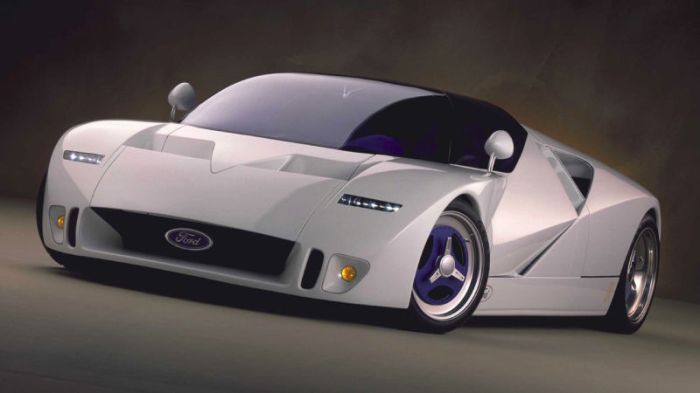
The Ford GT90 concept was quoted as the spiritual successor to the original GT40 and billed as the mightiest supercar in the world. The claimed performance figures and proposed power plant definitely didn’t disappoint in that respect, however any kind of links to the 1960’s legend were very difficult to distinguish. Other than the unique doors of the original, which bizarrely have a small section of roof to each door for no apparent reason, the only other similarity seemed to be the G and T in the name. Unveiled in 1995 to show off the company’s forthcoming ‘New Edge’ styling direction, the car sure looked like something from the future. Designed by someone who obviously favoured using a ruler rather than free hand sketching, the sharp angles and edges formed a shape that was anything but sleek yet appeared purposeful and muscular. Think more angular ladybird in form than svelte swordfish, but a ladybird that’s been on the steroids a bit.
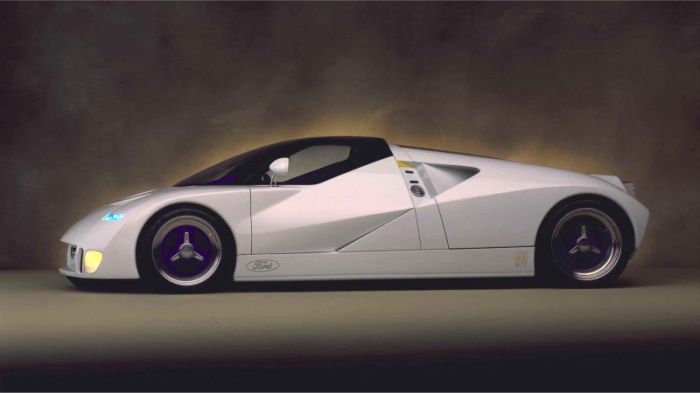
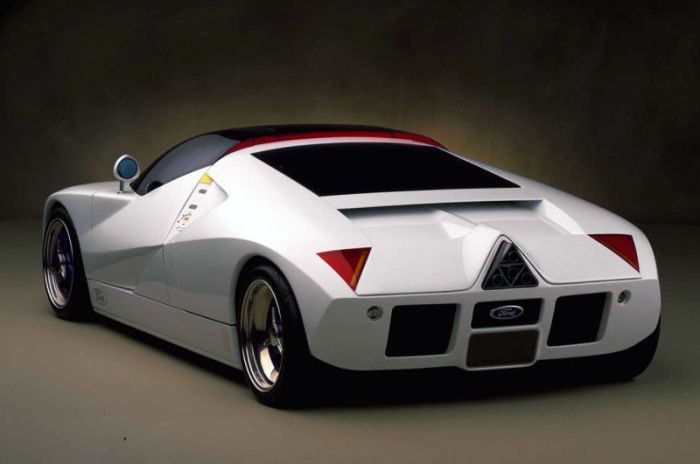
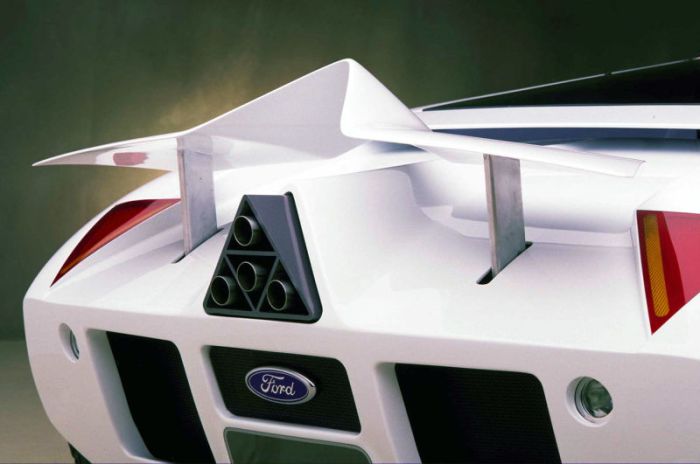
The large glass canopy is pure 90’s futuristic fantasy especially in the business man’s limo tint, and blue tints to the wheels and bodywork is something that BMW’s i3 and i8 are only just beginning to adopt. The crisp white finish of the carbon fibre bodywork is something that Apple was only just beginning to dream about for their computers and iPods, and a for way exhaust arrangement that Pagani engineers would be proud of. Simple bold round fuel filler cap teemed with triangular brake lights and the squarest of rear windows meant that the Ford looked pure Buck Rogers or the dreams of a Blue Peter / washing up liquid space project. Access to the overly blue interior, not an understatement by any means, was by pressing the square bright yellow panels on the side of the car, something that only sci-fi enthusiasts could dream up. If it appeared on the Ford stand today at a motor show, it would still get the same reaction of shock and awe. Details such as the quad exhausts, that are nothing new on a supercar, were adapted so that they formed a triangular sort of stacked shape, dominating the rear of the car and complimenting the triangular light clusters. Draping angularly over the triangle exhaust arrangement was the equally bonkers automatic rear spoiler. Neatly folded along the back of the car, until speed dictated the amount it raised, the spoiler followed the lines of the rear with a point or peak in the middle to match that exhaust arrangement. Obviously affecting airflow wasn’t as important as interacting with the New Edge styling, try telling yourself that when you need all the aerodynamic witchcraft help you can get at 250mph plus.
Technology involved was cutting edge for the time, with a honeycomb section aluminium monocoque chassis with moulded carbon fibre body panels to keep weight down. The exhaust from the mighty 6 litre quad turbo 48 valve V12 was said to be that hot that ceramic technology, similar to the tiles used for the space shuttle programme, was used to prevent any damage occurring to the body panels. The projected top speed of 253mph was something that at the time was an unbelievable amount, something that was only achieved over 20 years later when the all conquering Veyron was unleashed. It definitely had the power to match the spaceship looks showing that Ford meant business with the concept.
Underneath the fancy body and futuristic styling there was however a completely different beast altogether; a Jaguar XJ220 (See previous post ‘Jaguar’s Jumbo Jet that went like a Rocket‘). Ford, at the time, owned Jaguar and therefore borrowed much of the components from that car, obviously proven to work at the high speeds it was claimed to achieve. Despite the fact that Ford created a bespoke engine at great expense specifically for the GT90 it borrowed even the gearbox from the big cat, probably the most dated and un-futuristic part on the whole concept.

So why didn’t the GT90 get built despite its world beating credentials? Well the car was only ever intended as a concept and an introduction to the new edge styling that Ford was to use on its Ka, Focus, Mondeo, Galaxy, Cougar and Fiesta for the next 15 years or so. At the time, Ford producing a car that would cost multiple hundreds of thousands was possibly a step too far for a company that was about to introduce the world to the Ka that would set you back less than £8,000. Besides, they already had the Jaguar XJ220 in their stable so had nothing to prove in terms of desirability and performance stakes. The concept however was rare in that it actually worked, showcasing a strange mix of intent yet a bit of a pointless expense especially when creating a bespoke engine for it. Yet the car showed the world that Ford not only meant business, and had the engineering know-how and design ingenuity to prove it, but that one day they may decide to reincarnate the GT40 in one form or another. 20 years later we are now in the cusp of that very moment, and looking forward to seeing what the latest Ford GT has to offer. Judging by the initial concept and previews it should be quite the supercar offering, something that has been well worth the wait.
Each Thursday is Throwback Thursday, a blog post about a design classic or iconic model that influenced the future of car design. Make sure you sign up to the mailing list to ensure you receive the latest blog posts as soon as they go live.

 HYPE Automotive