Usually when a multi-national manufacturer unveils a new product, for years it has been cloaked with top secret disguises, signed oaths of secrecy or not seen by any member of the public or even employees. Companies such as Apple are so secretive with their concepts that rumours start months before a product is launched and spy shots of forthcoming models are very scarce and so grainy that their authenticity is always questioned. Car companies are at a slight disadvantage when it comes to producing new concepts as many models are required to be tested and put through their paces in a variety of locations to test the new configurations and running gear. Many go to great lengths to disguise the cars with crazy vinyl wraps, matte paint finishes or reworked bodies of existing models stretched to fit a new chassis underneath. Some companies however choose to do things a little different.
In 1999 Bugatti arrived at the Tokyo Motor Show, fresh from their Volkswagen takeover enthusiasm, with their EB 18/4 concept. Aiming to provide a glimpse of their intent to return to supercar stardom and show the future of the company, the concept looked like a fresh take on performance and styling and promised power like nothing else. As is the way with many returning companies under new owners, the EB 18/4 was taken with a pinch of salt and the likelihood was that the car would never see the light of day. The concept car featured details harking back to Bugatti’s of old and not so old, with the famous horseshoe grille and curved rear profile from the early days and even a quad-turbo powerplant like the EB110. In 2005 the world got their first taste at the production Veyron, a barely reworked version of the concept previewed more than 6 years earlier, proving Bugatti aren’t one for changing their minds when it comes to previewing their design future. Although arriving a little later than promised the brand has never looked back since, and the model has been such an engineering and manufacturing success that they’ve decided to have another go at pushing the boundary a little further. The Veyron re-wrote the rule book when it comes to supercars producing more power, more speed, more luxury, more expense than anyone had seen before and becoming a Top Trumps legend in the process. There isn’t a new supercar launched today who’s performance figures don’t include the phrase ‘ . . . that’s more/less than the Bugatti Veyron’ somewhere in the mix.
Rumours of the Veyron replacement have been circling for a while now especially since the last of the outgoing model rolled of the exquisite Alsace production line. Early estimates were that it would redefine the speed boundaries and power output figures once again and that it would be a showcase of technological advances just like its predecessor. In September last year at the Frankfurt Motor Show, Bugatti showed off their Vision Gran Turismo, an apparent mock up of a digital only creation for the world of Playstation racing games. Many manufacturers had done similar cars for the famous racing series, from Citroen’s GT and Mercedes’ AMG Vision Gran Turismo to Aston Martin’s bonkers DP-100 (All of which are well worth a Google search!). Bugatti seemed to have gone to town on their version, producing a road going version that seemed to be not only in full working order but also capable of showing the Veyron a thing or two. Again the car was said to show the future of their design direction and a hint of what the next car could look like, but in Bugatti’s terms this usually means here’s our new car. Follow up spy shots of concept cars seen on the road showed that the styling and appearance of the apparent replacement didn’t stray too far from the showcased concept in their minimally disguised test cars. In fact, it appeared Bugatti had pulled the same trick as they did with the Veyron concept all those years ago.
A press release emerged and date was set that the Veyron replacement, to be named the Chiron, following suit with naming their cars and special editions after famous racing drivers from their history, would be unveiled at the Geneva Motor Show.
Yesterday’s release of the new car in Geneva was done among many concepts and new car previews form a whole host of manufacturers over the few days, but unexpectedly it is the Chiron that everyone is talking about. No surprises that the car looks near identical to the Vision Gran Tursimo concept, someone really needs to tell Bugatti how previews and future design direction concept cars are meant to look crazy and nothing like the actual cars they’re about to reveal. Maybe it’s because the cars they produce are so exotic and out of this world that to dream of even more unrealistic cars as a mere concept simply isn’t possible.

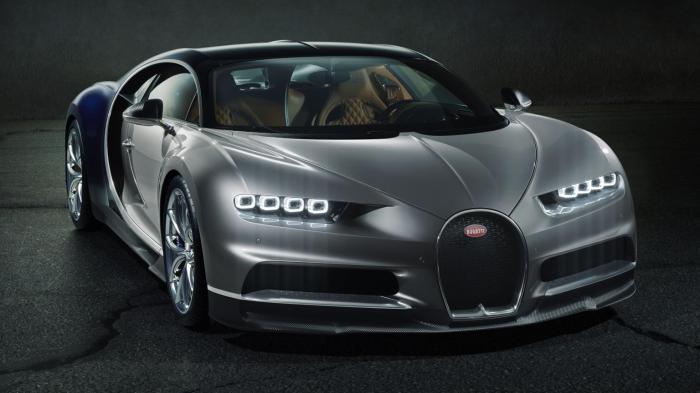
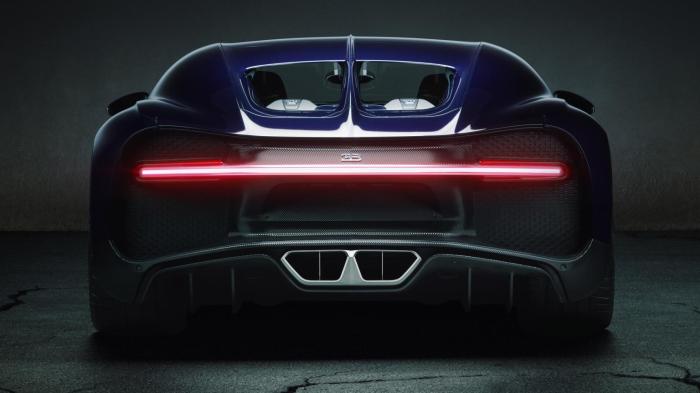
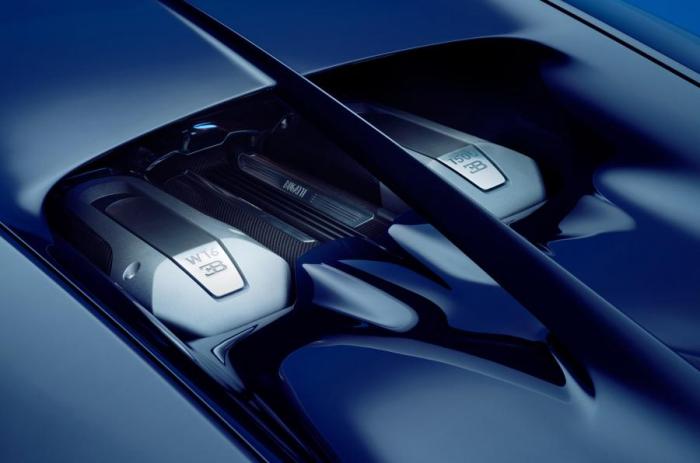
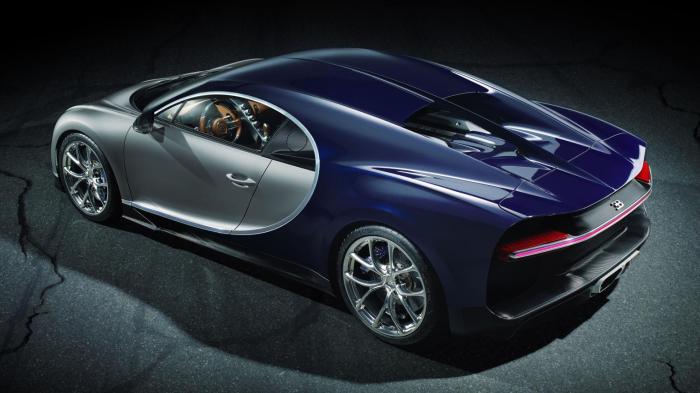
The resulting Chiron is a real thing of beauty. A clear evolution of the styling and design thoughts with the Veyron but packaged in a futuristic blend of sleek curves and aggressive styling tweaks. Bugatti have managed to squeeze design details and styling cues of their greatest and most famous racing and road cars into something that looks as alluring and desirable as Hollywood’s visionary creations for the future. Although similar in stance and profile, the simple bold design cues of the Veyron have been switched for aggression and meaningful aesthetics aplenty. The recessed quad round headlights appear like a furrowed brow and an angry prelude to a car that clearly means business. The horseshoe grille retains its pride of place as a nod to the racers of the early 1900’s, yet this time it has been enlarged, with the familiar red oval of the Bugatti badge in the centre. The swooping bonnet styling flanked with diagonal creases from the Veyron remain a key feature to the front, most probably due to aerodynamic qualities and efficiency at displacing 250mph+ winds. The low raked windscreen merges seamlessly with the long roof that continues over the engine cover, much like the Super Speed evolved to have, a definite aero styling feature to aid airflow and engine cooling at speed. Huge wheel arches that struggle to contain the Chiron’s massive wheels, as they did on the Type 57, are integrated into the flanks smoothly and with more of a bodywork crease than a bulge. The roof line that starts with a visual continuation of the windscreen surround continues round and curves back towards the front wheel, disguising the air intake for the massive 1500bhp engine but also evoking memories of the Type 46 paint job (although strangely there’s a hint of Citroen 2CV about the same feature but don’t tell anyone). At the back there is a minimal linear brake light, a bank of huge quad exhausts and the now famous adaptive rear spoiler and air brake and that’s about all. The car mimics the central spine of the Type 57 Atlantique that runs over the bonnet, the roof and continues as a flying strut over the famous exposed engine bay to the rear. From behind the double window arrangement looking through to the cabin looks pure vintage Bugatti. The chopped rear end is nearly all grille, surely a necessity to displace the heat from the immense engine and an aerodynamic aid when you’re nudging the top speed of over 260mph. Despite the stunning styling of the car, there’s definitely a limit as to what was possible due to the engineering necessary to push the speed limits.

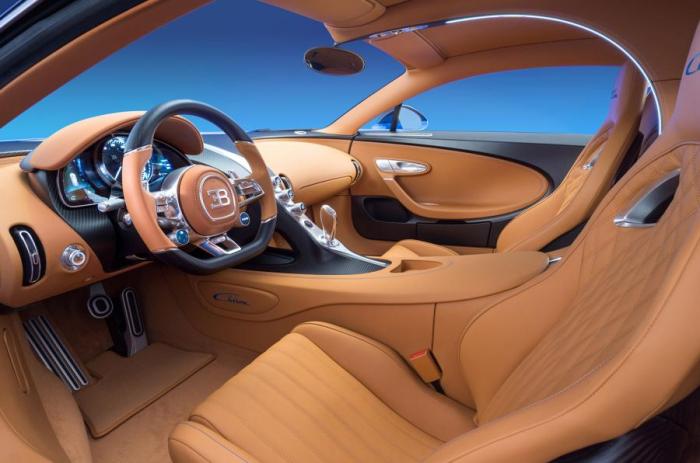
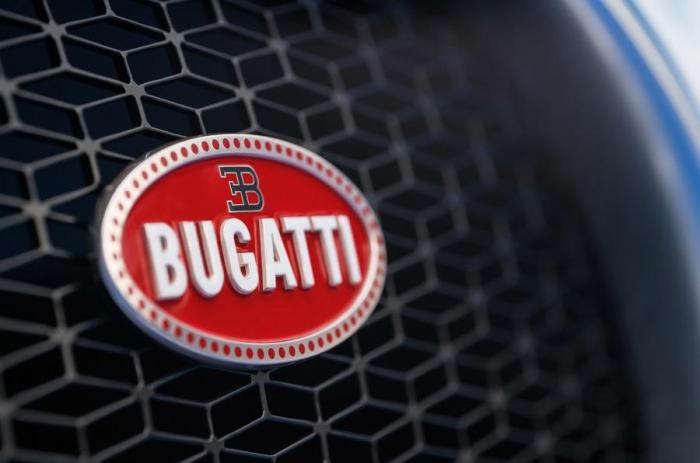
Inside the Chiron the interior is even more opulent that the Veyron, an exotic blend of rare minerals and exclusive materials. The arched back and central spine of the Bugatti Type 57 is replicated in the interior with a curved central beam that doubles as the most elaborate interior light you’ve ever seen. Lashings of the finest soft leather cover everything insight apart from the minimalist matte carbon fibre of the dashboard. Comfort and luxury is most definitely the key feature of the stunning interior whether you’re doing 6mph or 256mph and the no doubt endless options list will keep lucky customers busy for quite some time. Attention to the finest details was a signature of the Veyron and the Chiron doesn’t disappoint in this respect. Everything from the airbag deploying through carbon fibre, a first for a production vehicle, to the grille badge crafted from enamel and silver is designed and engineered to the finest standards.
Bugatti have not disappointed with the Chiron in any respect. The benchmark laid down by the now iconic Veyron has been matched and extended and the possibilities in terms of sheer engineering and technological advancements pushed further than before. If the performance figures and driving thrill are anywhere near as good as the way the car looks, then the iconic status of the Chiron is assured. Following a legendary car is always something that can be tricky for car manufacturers, but with the Chiron, Bugatti have excelled themselves with the desirability and exotic essence of the car. Producing a design that hints at their heritage and history yet points towards the future, whilst proving that they’re not about to give up their crown of producing the ultimate supercar any time soon.
 Search: CarDesignBlogUK

 HYPE Automotive
Exquisite, it is indeed the right word ! I’m going to Geneva on Monday, I bet it is even more fabulous in reality…
LikeLiked by 1 person