This weeks Thursday Throwback comes from a company famed for their road going performance cars, yet owes their success to one of their biggest failures. In the late 1970’s and early 80’s there wasn’t a manufacturer worth their salt that didn’t intend on entering some kind of limited run homologation racing series. Car designers and companies were running a mock with outlandish creations that were being designed and built specifically to go racing and also to produce road going versions to please the rule makers and enthusiasts alike. In the mid 70’s BMW had decided they wanted to join the cool kids and in collaboration with Lamborghini decided that they would also give it a go. Styled by famous Italian design house Ital Design by the even more famous Giorgetto Giugiaro, and to be built in the famous landscape of Sant’Agata by Lamborghini, the intended fibre-glass bodied racer was low, wide and very wedge shaped. The relationship however didn’t last long and the crazy Italians, hampered by financial issues, and the sensible German’s, keen to get a move on, couldn’t see eye to eye. BMW decided they were going to go it alone and created their very own division to show the world what they were capable of. The M division was born and the rest as they say was history. Or was it.
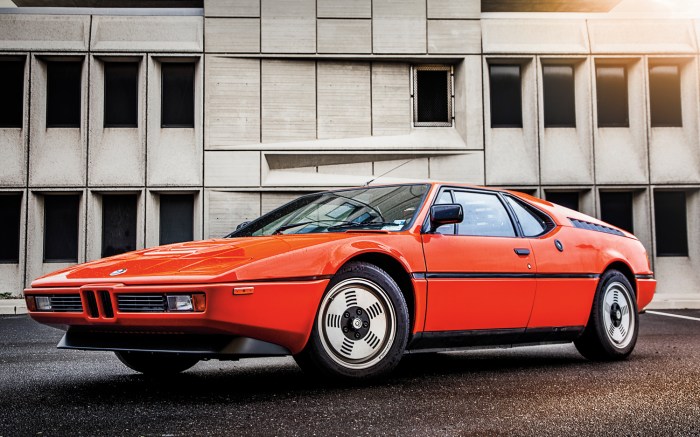
The intended silhouette series of racing was on its way out to make way for saloon car racing and the M1 was left raring to go but with no racing series to enter. BMW had created their finest ever work with their very best engineering know how and left without an arena to show it off. What should have been one of their greatest racing success stories was about to become one of their biggest financial failures and it was all down to bad timing.
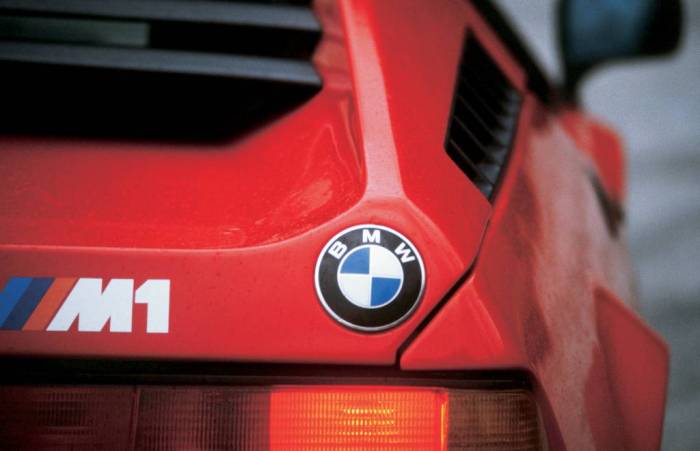
The resulting car they had unwittingly produced is seen by many today as the very first of the everyday usable supercars. As a road car it was the perfect recipe of racing derived suspension, steering, engine and mid engined layout, built with BMW’s renowned quality and craftsmanship. The looks alone were way ahead of their time and like no other BMW that had gone before. That low wedge shaped silhouette was like something from a science fiction novel and the flat wide nose was very un-BMW like. Pop-up headlights, a recurring theme with sports cars of the era, made the low nose possible and meant there was no space for the trademark double round lights of BMW’s of the day. The styling was new and cutting edge, something not often said of BMW yet the lineage and heritage shone through with the famous, if not slightly squashed, kidney grille a the front. Special wheels unique to the car created low drag resistance and reflected the many grilles and linear styling forms of the wedge shape. The mid engined layout created a flat rear engine cover, flanked either side by buttresses giving further hints to its engine positioning. Creating a low rear to the car not only improved the aerodynamics but meant that unusually for a supercar (just ask a Lamborghini Countach owner) you could see out of the back with ease. The bodywork was awash with quirky styling highlights and unique futuristic creases and vents and, surely for the first time on a car, two BMW badges adorning either side of the rear. Presumably just in case you were unsure of the maker from one side to another.
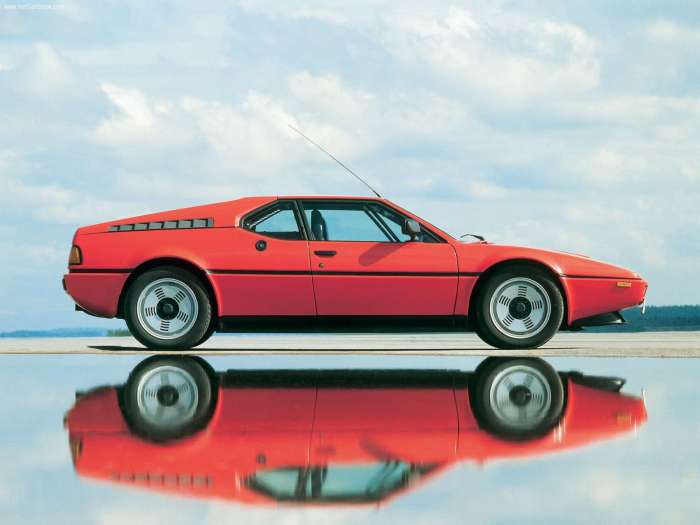
Thanks to the lightness of the stunning bodywork performance was astonishing, not just for a car of its day but enough to trouble many of today’s cars too. The mid-mounted 24-valve 3.5 litre engine produced 266BHP and propelled the car to 60mphin just under 5.5 seconds. The very same lightness and mid-engine layout, together with the racing derived chassis and suspension, ensured that handling was race car sharp and befitting of the super-fast appearance. The same efficiency meant that it was just as at home and as comfortable pootling around town or nipping to the shops as it was lapping the Nurburgring.
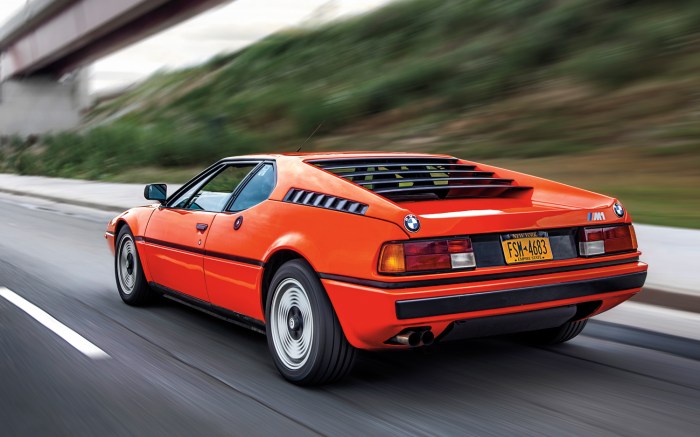
What BMW had created was something that for racing arrived just too late, but for a road car, was way ahead of its time. It was expensive, built in limited numbers and didn’t have the racing pedigree that it should have. As a result it was more than a bit of a flop, it was a sales disaster. Customers were unwilling to part with their hard earned money for an over priced, over-engineered, non-race proven performance car. Thankfully all was not lost. The recipe that BMW used to create the M1 led to the creation of the ultimate form of BMW cars, the ‘M’ division. The race derived suspension and engine designs were gifted to their road cars to produce the now iconic M5 and M3 super-saloons. Never before seen performance cars created from regular everyday family cars had been born and have changed the automotive world ever since.
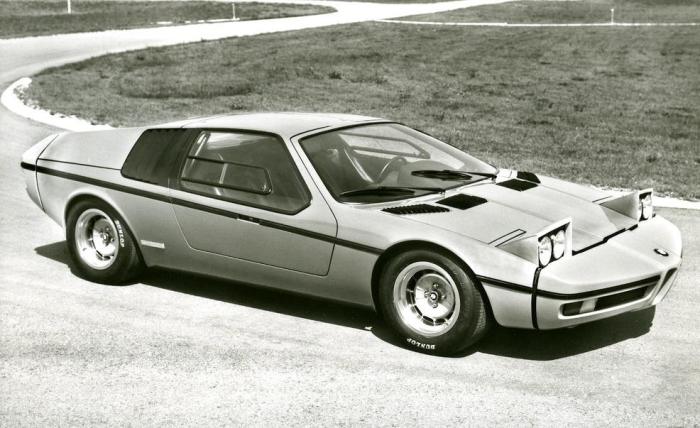
The M1 should have been the ultimate everyday supercar. It created the idea that fast desirable cars didn’t have to be uncomfortable, impossible to handle and required a yoga lesson to get in and out of. It proved that racing engineering could be used on the road to incredible success and redefine what performance cars stood for. If only people knew at the time that it would go on to produce not only one of the most successful saloon car racers ever, but an icon of road going performance with one of the biggest cult followings of any manufacturer, they might have paid more attention. As it was, only 430 were made, and finding one today in mint condition is a very challenging task. The M1 is rightfully considered a motoring legend, and like the majority of history’s icons, was hugely unappreciated in its time.

 HYPE Automotive